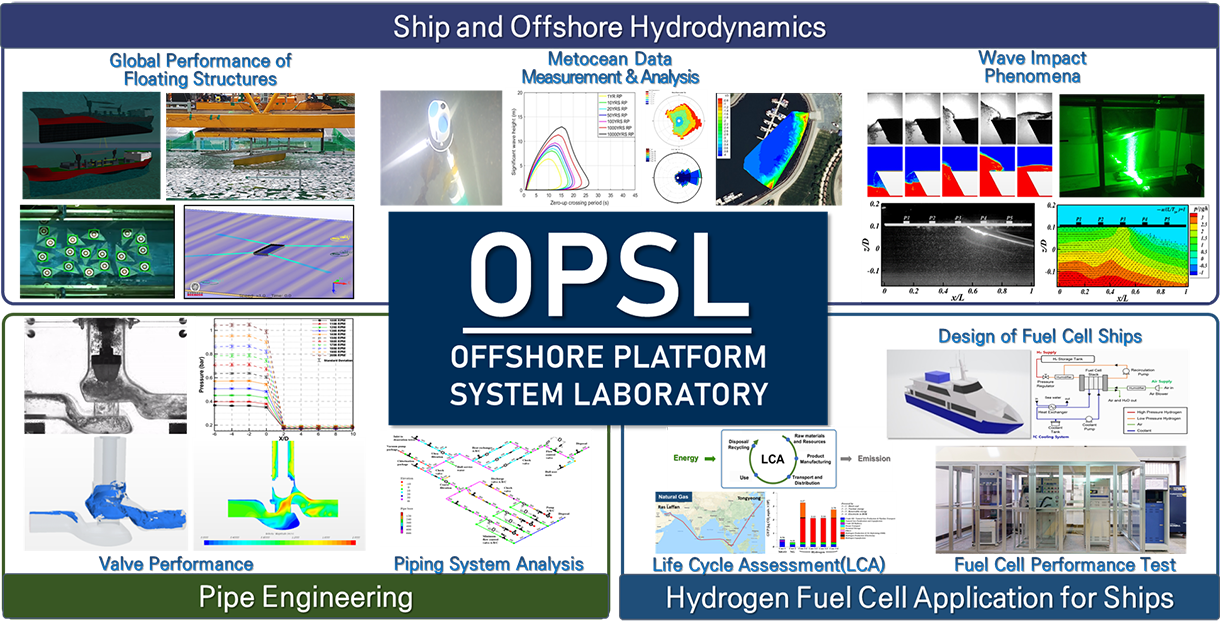
Ships and offshore structures can be easily exposed to extreme environmental conditions which cause a loss of seakeeping & station keeping performances, wave impact phenomena.
We study on the hydrodynamic performances and characteristics of ships and offshore structures for safe and better performances in ocean environments.
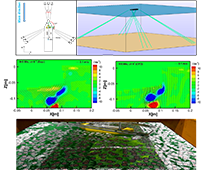
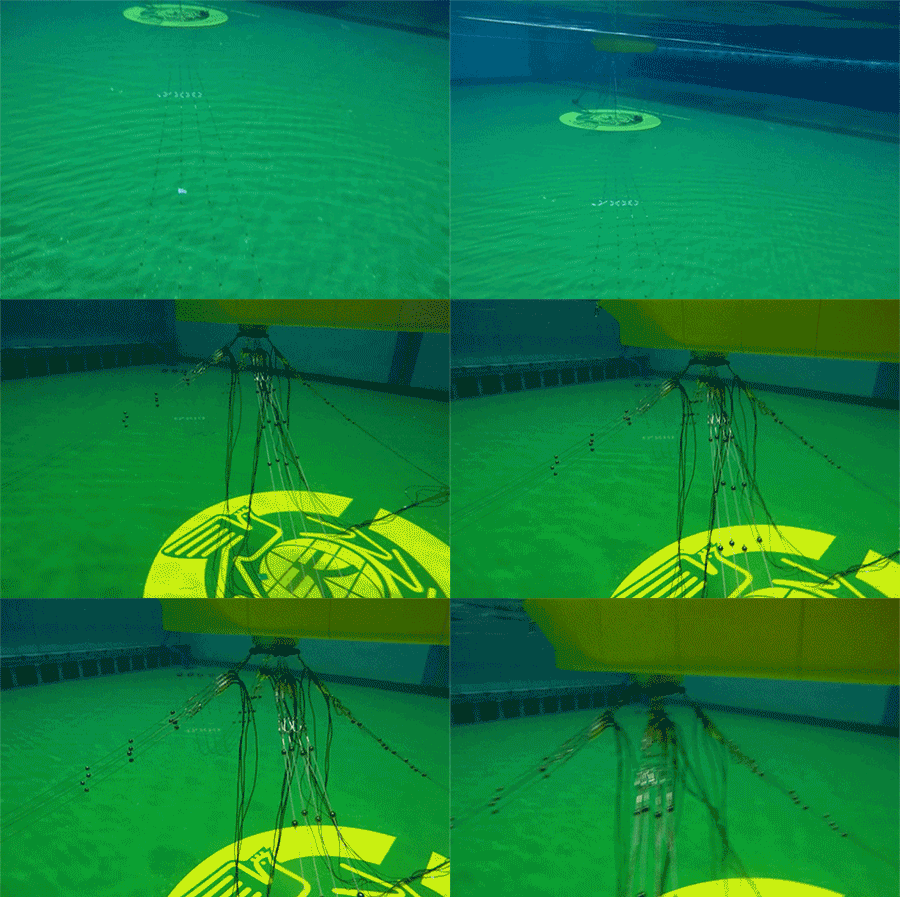
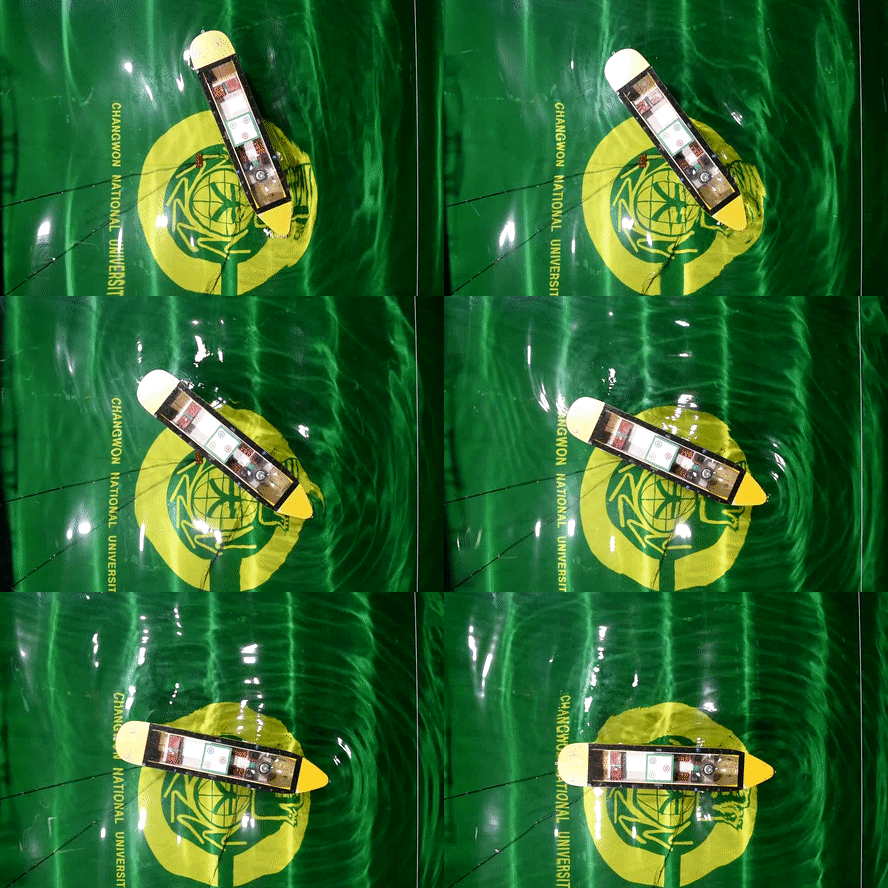
Global Performance of Floating Structures+
Motion and Mooring Analysis in Harsh Environments
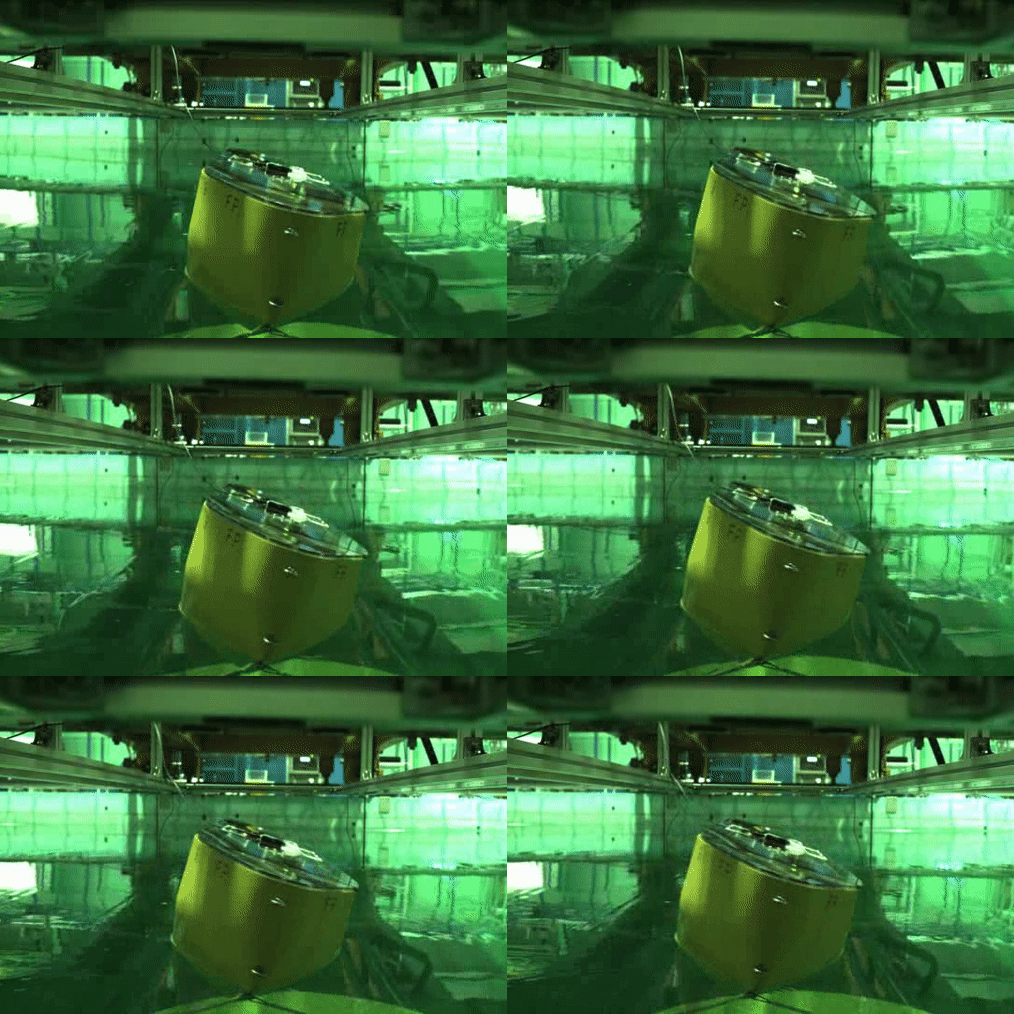
Seakeeping & Station-keeping Performance Evaluation by Model Test
Mooring System Design in Extreme Ocean Condition
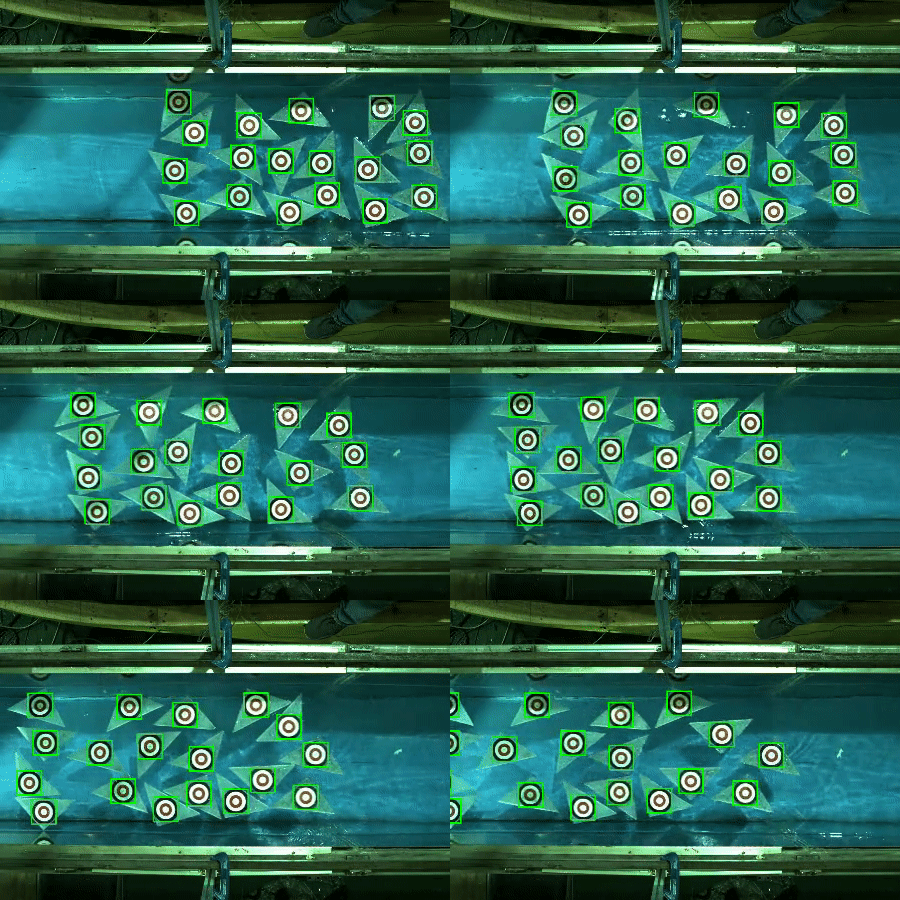
Ice Tracking using Image Processing Technique
Direct Time Domain Simulation for Global Performance of Offshore System
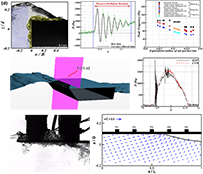
Wave Impact Phenomena+
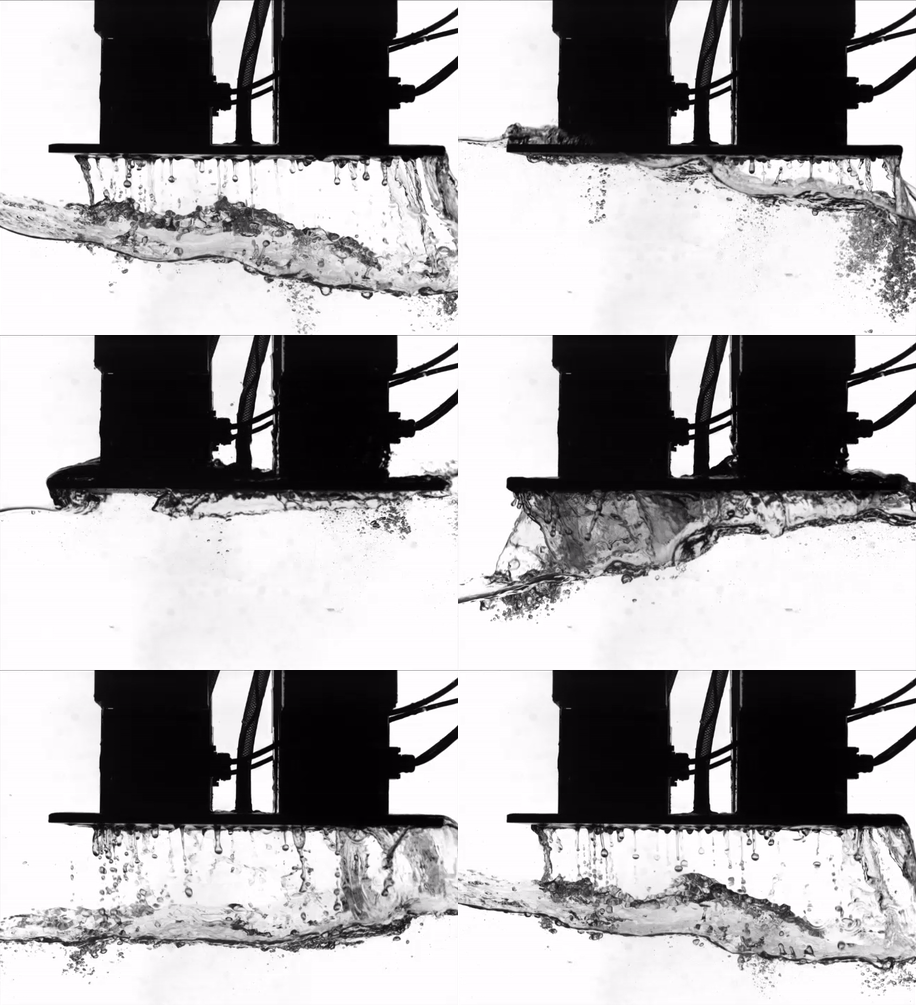
Hydrodynamic Characteristics of Green Water Phenomena
Studies on Wave Impact under Deck
Optical Techniques for Measurement of Multi-phase Flow
Pressure & Force Measurement and Estimation with PIV (Euler Equation) and CFD
Prediction of Wave Impact Occurrence using Machine Learning
Green-water impact research.
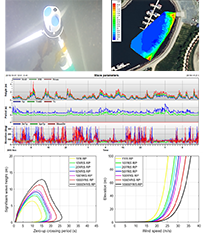
Metocean Data Measurement and Analysis+
Extreme Value Analysis
Inversed First Order Reliability Method
Metocean Data Measurement using ADCP
Bathymetry Measurement with Autopilot USV
Metocean Forecast using Machine and Deep Learning
Metocean measurement and analysis.
Pipe Engineering
1 / 4
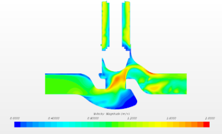
Valves and pipelines are widely used in ships and offshore structures to regulate the flow of fluids in operating facilities. During operation, the valves could be endangered by various phenomena such as cavitation, and the dynamic loading like water hammer can be occurred in the pipeline systems and result in the significant damage to pipe and supports.
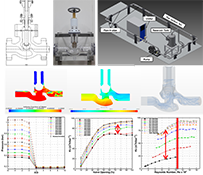
We study about the hydrodynamic characteristics of multi-phase flow inside of the valves and piping systems with experiments using flow test loop, and numerical analysis about piping systems.
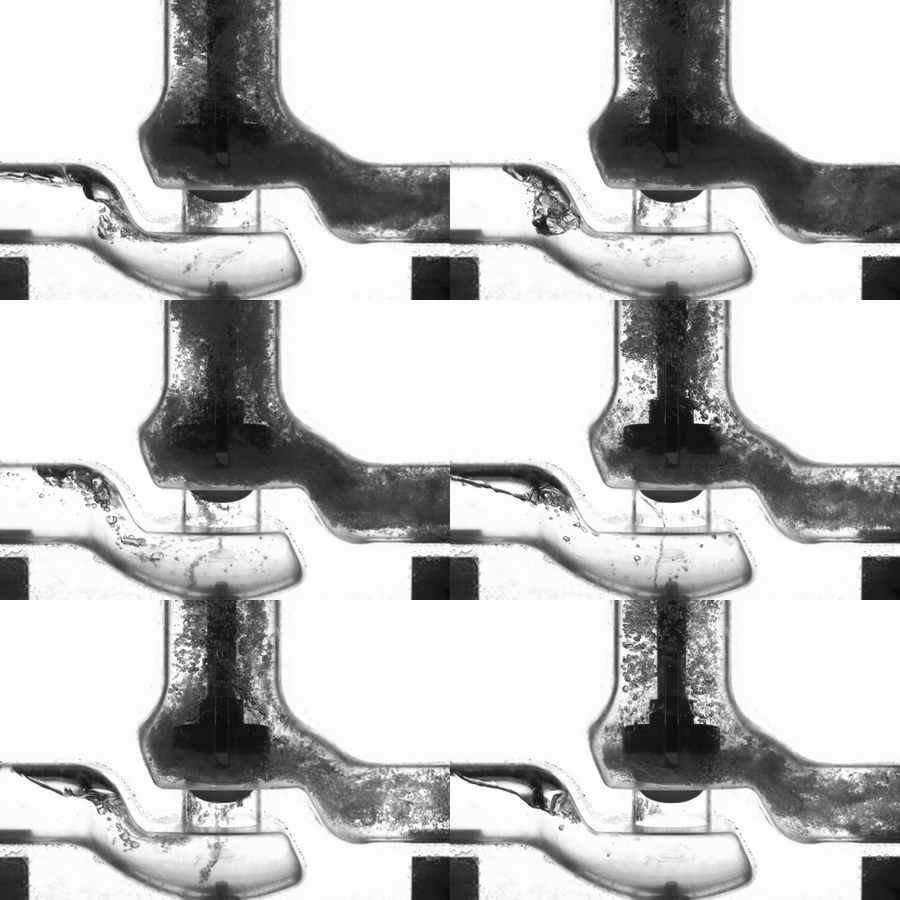
Fluid Hydrodynamics in Valves+
Hydrodynamic Characteristics inside of Valves
Multi-phase Flow and Kinematics of Flow in Valves
Geometrical Design of High-performance and Safe Valves
Valve hydrodynamics.
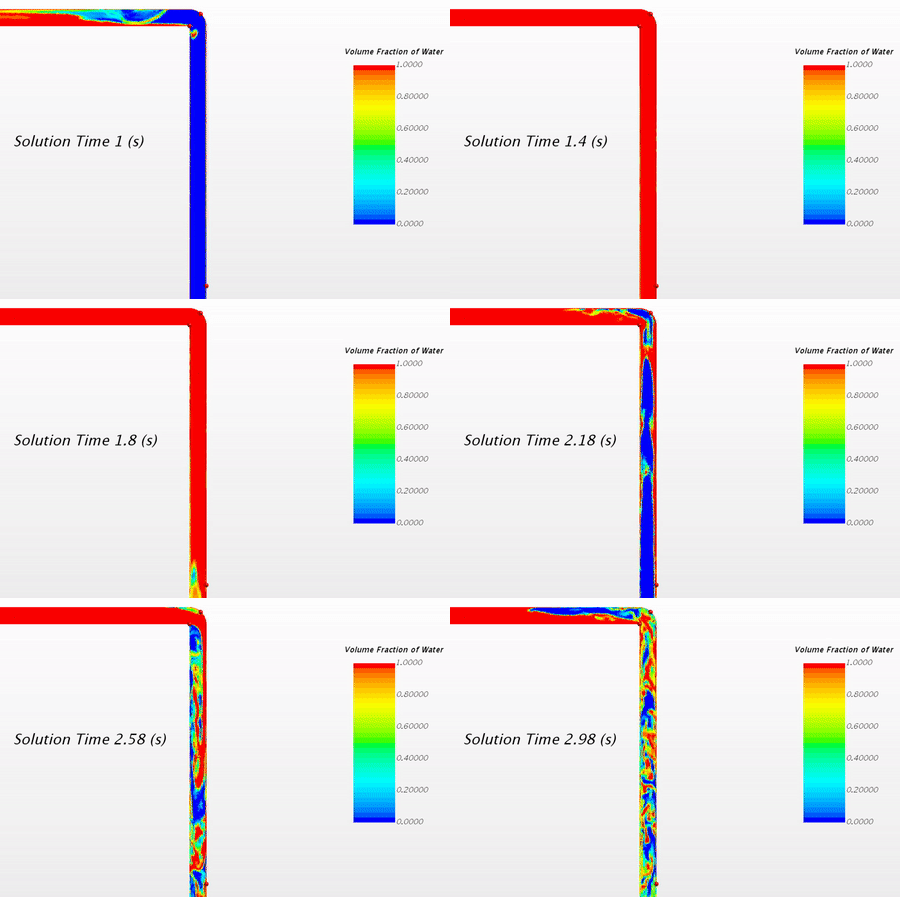
Piping System Analysis+
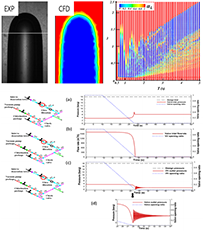
Pipe/Valve System Analysis in Operation and Emergency Scenarios
Estimation of Water Hammer Phenomena
Structural Evaluation based on Method of Characteristics Analysis
Study on the Effect of Rising Bubbles in Pipes through CFD
Piping-system analysis.
Hydrogen Fuel Cell Application for Ships
1 / 5
As concerns increase about the potential results of global climate change, the International Maritime Organization (IMO) has developed regulations for the exhaust gases from ships to mitigate the air pollutions(NOx, SOx, and GHGs) from maritime shipping.
To meet the regulations, it has led interests in hydrogen fuel which produces only water through fuel cells in operation with zero emissions.
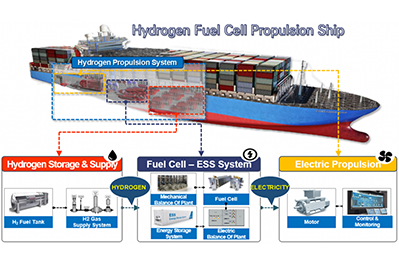
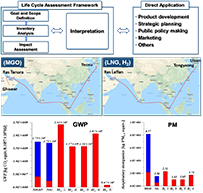
We conduct assessments for the environmental impacts of alternative fuels for ships including hydrogen, investigate for the fuel cell performances in ship operation environments, and design ships equipped with the fuel cell propulsion system.
Environmental Impact Assessment through Life Cycle Analysis (LCA)+
Comparison of Exhaust from Alternative Fuels for Ships
Environmental Impact Assessment for Well-to-Tank, Tank-to-Wake, and Well-to-Wake Phases
Feasibility Study of Alternative Fuels based on Environmental Effects in Each Life Cycle
Life-cycle assessment of alternative marine fuels.
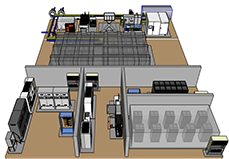
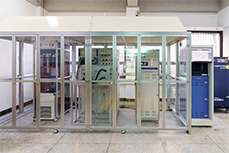
Fuel Cell Performance Study under Ship and Ocean Environments+
Fuel Cell Power Generation Performance Tests under Ship Environmental Conditions, including temperature, humidity, salt in air, and motion
Investigation of Chemical Reactions inside Fuel Cells using CFD Simulations
Electric Propulsion Systems powered by Fuel Cells
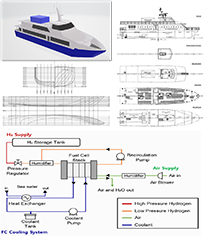
Concept/Basic Design of Ships with Hydrogen Fuel Cell Propulsion System+
Principal Dimensions and Hull Design for Hydrogen Fuel Cell Propulsion Ships
Hydrogen Fuel Supply and Power System Design for Ship Operating Scenarios
Electric Load Analysis for Fuel Cell Ships with Hybrid Fuel Cell and Battery Systems